

Happy New Year and Shanah Tovah

I wish all my friends, family, and readers a very happy New Year and a Shanah Tovah. Let’s hope for good health for all of us. And to all those around the world who are facing hardship, let’s hope the coming year brings them better health, security, and opportunity.

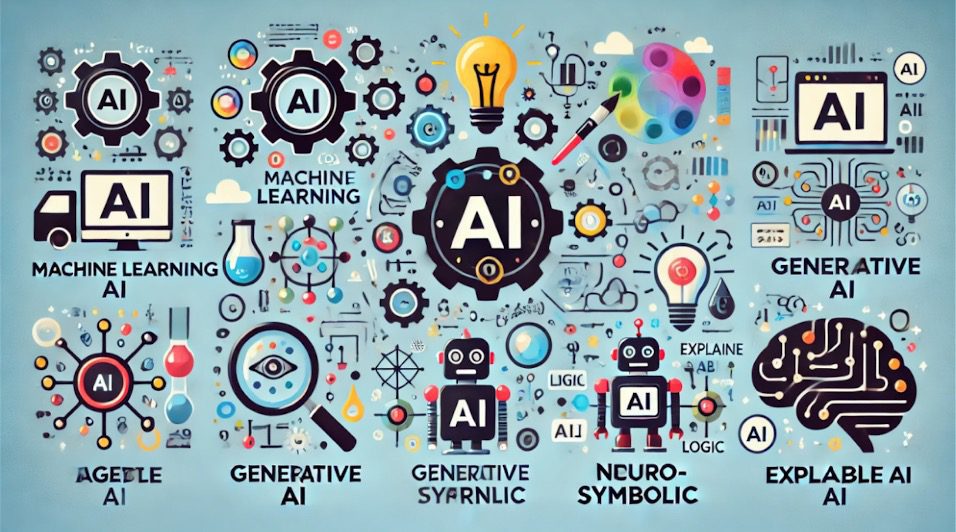
I asked Perplexity (my AI assistant) to create the image at the beginning of this post. That is the tip of the iceberg. AI will make great strides in the new year in every field of endeavor. In the short run, some jobs are being eliminated but other jobs are being created. 

One of the many debates underway is about kids in school using AI to cheat. It reminds me of a similar debate. By the mid‑ to late‑1970s, inexpensive four‑function and simple scientific calculators were selling for under 25–30 dollars. For example, the Texas Instrument‑30 was under $24.95 by 1976), which made them common consumer items and practical for schoolchildren. Some people argued kids would forget how to do arithmetic. What happened was kids learned more advanced mathematics, geometry, trigonometry, and calculus at earlier ages.

In the longer run, AI and robots will eliminate millions of jobs. There could be one million robots in action this year. Some people are already arguing we will need guaranteed basic income. Most politicians on both sides of the aisle find the idea distasteful. However, they don’t offer alternatives. Even rich countries will have lots of people who can’t count on steady work or enough money to live on. A guaranteed basic income would make sure everyone has at least a small, reliable amount of money to help them with simple needs like food, rent, and medicine. This will be the big debate in front of us. I wrote about this in
Robot Attitude: How Robots and Artificial Intelligence Will Make Our Lives Better.

Note: I use Perplexity, ChatGPT, and Gemini AI chatbots as my research assistants. AI can boost productivity for anyone who creates content. Sometimes I get incorrect data from AI, and when something looks suspicious, I dig deeper. Sometimes the data varies by sources where AI finds it. I take responsibility for my posts and if anyone spots an error, I will appreciate knowing it, and will correct it.


Books

I love to read books. All the books I have written and the books I have read are in my Goodreads profile. Feel free to view the profile here.


What’s New in AI this Week

AI this week is dominated by new laws taking effect, market optimism around AI-related stocks, and continued focus on “world models,” smaller specialized models, and practical regulation and deployment of AI systems.[1][2][3]

Latest regulatory and legal moves
– Multiple U.S. state AI laws just came into force on January 1, 2026, including California measures on AI transparency, safety, and limits on certain AI-driven pricing algorithms.[4][5][6]
– A new federal executive order signed in December 2025 sets up a policy framework to preempt state AI rules that are seen as burdening national competitiveness, especially laws forcing models to change “truthful outputs” or disclose training data in ways seen as unconstitutional.[7][8]
– Several new state laws also target AI deepfakes, automated hiring systems, and AI companion chatbots, adding safety, disclosure, and non-discrimination requirements.[9][10][8]

Industry and research trends
– Analysts are emphasizing a shift in 2026 from hype to pragmatic AI: more focus on reliable agents, “world models” that understand and simulate environments, and “physical AI” in robotics and industrial systems rather than just chatbots.[2][11]
– Open-source and smaller models remain central, with ongoing diversification of strong non-U.S. and open models (like DeepSeek and Qwen) and pressure on big vendors to support interoperability and transparent data pipelines.[12][11][13]
– Commentators expect increasing use of AI in heavy industry, logistics, and energy, with AI becoming part of the “electro‑industrial stack” rather than only a software layer.[14][11]

Market and economic angle
– AI-related stocks helped drive a strong start to the 2026 trading year, with semiconductor and data-center-linked companies gaining on expectations of continued AI demand.[15][3][16]
– The broader 2026 tech outlook highlights large capital flows into AI infrastructure (chips, data centers, power) as regulators simultaneously begin scrutinizing AI’s energy and climate impact.