
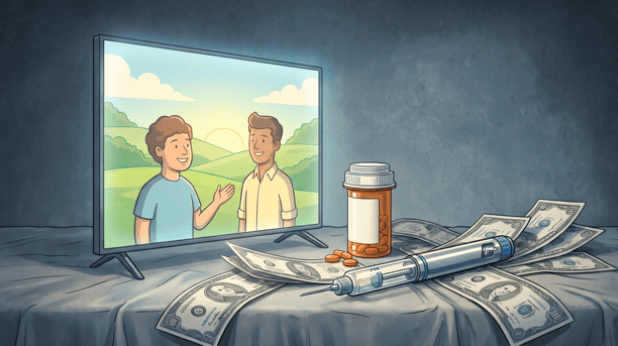
One of the topics I have written numerous magazine articles about and been on-the-air in interviews about has been direct-to-consumer (DTC) TV advertising of prescription drugs. I felt strongly about the issue more than ten years ago and feel even more strongly about it now. DTC TV advertising of drugs is not needed and has negative effects as I will describe below. Aside from New Zealand and the U.S., no other country in the world allows DTC drug advertising, for good reason.
About ten years ago, millions of viewers of the Superbowl watched a celebrity step out of a limo and heard Mario Lopez, Jr., television host and actor, highlight the need to fight her toenail fungus. The ad suggested people with toenail fungus need Jublia, a $1,000 drug not covered by Medicare. A clinical study showed the cure rate for the drug was 15%. Anyone with toenail fungus has either talked to their doctor about it, researched it online, or is not bothered by any symptoms. The ad had more than 2,000 TV airings. The AMA, which represents more than 200,000 physicians in every state, said the growing proliferation of TV ads is driving demand for expensive drugs despite the availability of clinically effective and less costly alternatives. Following are my six reasons why the ban should be implemented.
The pharmaceutical industry has done a lot of good for the world. Most babies born in 1900 did not live past age 50. Although the United States ranks #49 in the world, our life expectancy has risen to 79. Several factors have led to the increasing life span. Drugs created by the pharmaceutical industry have certainly contributed. The industry has also created drugs which enable people crippled with arthritis and other diseases to be happy and productive. Pharmaceutical research to create the wonder drugs is expensive and risky. Many drugs do not make it to the market. Profit creates the incentive to take the risks and the return on investment for the drug industry deserves to be above average. However, it has become disproportional. Among nonfinancial companies in the S&P 500, the median gross profit margin was approximately 38%. For the pharmaceutical companies gross margin is 68.64%.
Now the question is whether Congress can make an impact on the cost of healthcare. The pharmaceutical industry maintains a significant lobbying presence and provides substantial political contributions. In 2025, the pharmaceutical and health-products industry spent a record $457.3 million on federal lobbying, up about 15% from the prior year. The industry’s lobbying activity involved a substantial “revolving door” presence: about 51% of its nearly 1,500 lobbyists had previously worked in government.
For campaign giving, in the 2023–2024 election cycle, pharmaceutical and health-products companies, their employees, and affiliated PACs directed approximately $42.5 million to federal candidates: about $26.4 million to Democrats and $16.1 million to Republicans.
Politicians have said they had taken down big pharma for the benefit of consumers on Medicare. Medicare covers more than 4,000 drugs. The new ability to negotiate the price of drugs for Medicare was announced in 2022. Look at the details. The negotiated prices would start in 2026 for only 10 drugs. For 2027 the list would grow to 15 drugs. Can you imagine GM or Tesla exempting from negotiations for 99.8% of the millions of parts it buys? The government has. Meanwhile many taxpayers struggle to pay the rapidly growing cost of drugs. Some skip doses or share with family members. Some go bankrupt. Pharmaceutical industry, 1. Taxpayers, 0.
There are many lobbies; every industry has them. At times they do good things and prevent Congress from doing something stupid. In the case of pharmaceuticals, it is clear the lobby has a lock on Congress and causes them to act more for the benefit of the drug industry than for consumers.
I love to read books. All the books I have written and the books I have read are in profile. Feel free to view it here.